Preview

The vector of youth medical science

Advanced search

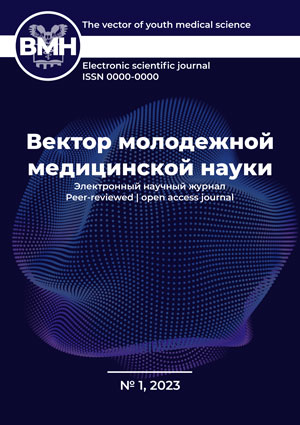
The magazine «Vector of young medical science» was founded in 2023 at Kursk State Medical University on the initiative of the Council of the University Student Scientific Society under the leadership of the curator of the SSS, Doctor of Medical Sciences. Associate Professor P.V. Tkachenko.

The decision to establish the journal was a natural result of the long work of its developers in the field of covering the results and achievements of student science.

«Vector of young medical science» is a publication aimed at publishing scientific works of young scientists and researchers in the field of medicine and healthcare. One of the main objectives of the journal is to ensure the dissemination of promising scientific data and groundwork among young scientists.

The journal is included in the list of publications included in the Russian Science Citation Index (RSCI).

The main headings of the scientific publication are: clinical medicine, biomedical sciences, pharmaceutical sciences, biotechnology and genetics.

The publication frequency is once every 4 months and includes about 30 original scientific publications.

Editor-in-chief – Pavel Vladimirovich Tkachenko – Doctor of Medical Sciences, member of the Russian Physiological Society named after. I.P. Pavlova, professor and corresponding member. Russian Natural Science Academy, director of the Research Institute of Physiology KSMU.

Current issue

No 4 (2025)
View or download the full issue PDF (Russian)

Обзоры литературы

Оригинальные исследования

54-58 9
Abstract

Introduction: Alcoholic cirrhosis of the liver (ACL) is the terminal stage of alcohol-related liver disease, characterized by irreversible changes and poses a serious threat to public health. Effective patient management requires a multidisciplinary approach, in which timely and adequate pharmacotherapy plays a central role.

Objective: A comprehensive assessment of the efficacy and safety of proton pump inhibitors (PPIs) and diuretics in therapeutic regimens for patients with ACL.

Materials and methods: A retrospective analysis of 25 medical records of patients with ACL who underwent inpatient treatment was conducted. Grapho-analytical, logical methods, and content analysis were used.

Results: The retrospective analysis of therapeutic regimens for 25 patients with alcoholic cirrhosis of the liver (ACL) identified the two most frequently prescribed pharmacological groups: proton pump inhibitors (PPIs) and diuretics.

Proton pump inhibitors were used in 80% of patients (20 individuals), in all cases in the form of omeprazole. The high frequency of prescription is due to the need for gastroprotection against the background of an increased risk of erosive-ulcerative lesions of the gastrointestinal tract, the theoretical possibility of reducing the risk of bleeding from varicose veins, and the prevention of the ulcerogenic effect of other drugs. The importance of considering the potential risks of long-term PPI therapy, such as an increased likelihood of bacterial infections and effects on gut microbiota, was noted.

Diuretics were received by 64% of patients (16 individuals), reflecting the high prevalence of ascites. The predominant use of spironolactone corresponds to modern standards for the treatment of ascitic syndrome and is aimed at correcting fluid volume and hormonal disorders.

Conclusion: Pharmacotherapy for ACL in a hospital setting is largely based on the use of PPIs and diuretics. The use of PPIs is aimed at preventing gastroenterological complications, while diuretics are used to combat ascites. The necessity of a balanced approach to prescribing PPIs is emphasized. To develop precise clinical guidelines, further prospective studies evaluating the impact of these drugs on long-term outcomes are required.

Клинические случаи


Creative Commons License
This work is licensed under a Creative Commons Attribution 4.0 License.